


Material science and automation engineering
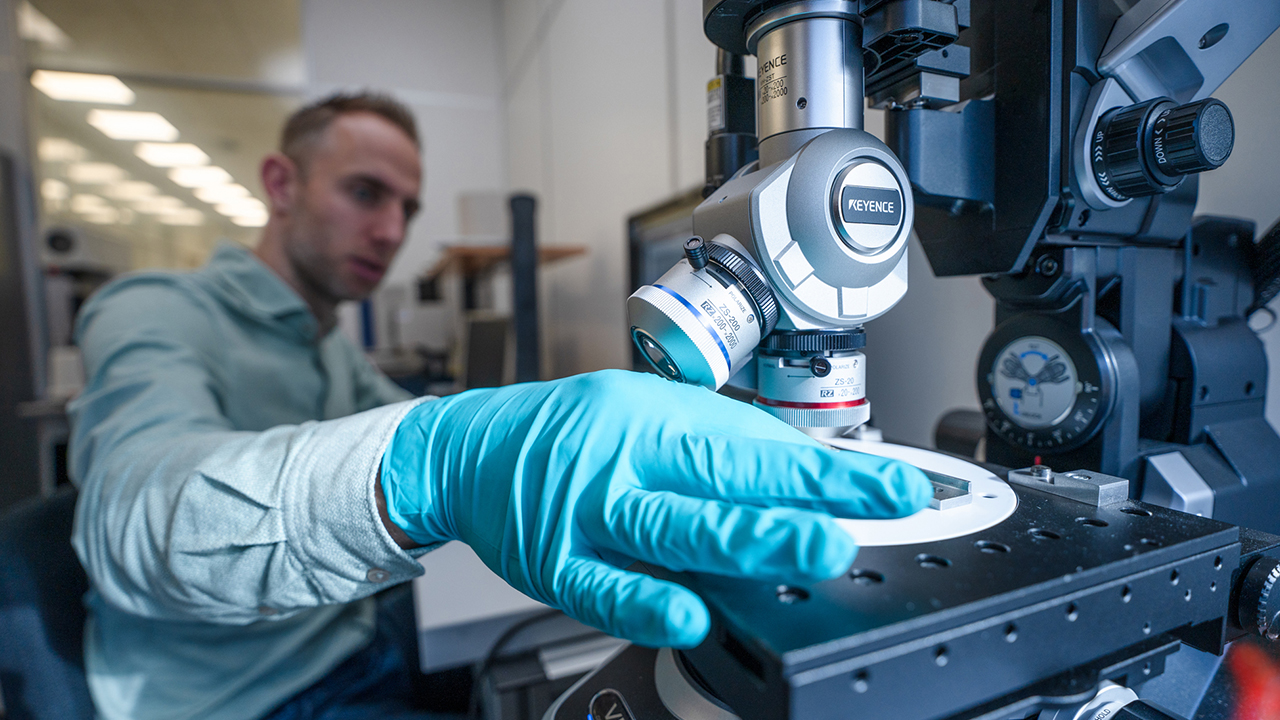
What works perfectly for stainless steel components fails spectacularly with medical-grade polymers. A gripper designed for rigid ceramics will damage silicone elastomers. We dive into specific engineering approaches for each material’s physical properties.
Plastics generate static electricity that disrupts precise placement
Medical device housings are often molded from biocompatible polymers like PEEK, polycarbonate, or polysulfone. During handling, friction between the part and tooling generates electrostatic charge. Parts stick to grippers when they should release, or repel each other when they should nest together. At macro scale, this is annoying. At microscale, placing a 2mm component with ±0.015mm accuracy, static charge makes consistent placement nearly impossible.
The solution isn’t universal; it depends on the specific polymer, the production environment, and the precision requirements. Ionized air can neutralize charge, but requires careful placement of ionization bars and validation that the ion balance doesn’t drift over time. Conductive grippers provide a discharge path, but only if the part geometry allows reliable electrical contact. Modified materials with anti-static additives can help, though any material change in a validated medical device triggers revalidation. The engineering challenge is finding the approach that maintains placement accuracy without compromising part integrity or adding unacceptable cycle time.
Flexible materials deform under gripping pressure
Silicone components, thin-wall polymer tubes, or elastomeric seals are common in medical devices, but they present a fundamental paradox: grip too lightly and the part slips during movement; grip too firmly and it deforms, making precise placement increasingly challenging. A gripper that works perfectly on a rigid part will crush a flexible one.
Successful handling of flexible materials requires force-controlled grippers that maintain just enough pressure to secure the part without deformation. This often means custom gripper design, soft contact surfaces shaped to distribute pressure across a larger area, real-time force feedback to adjust grip pressure dynamically, and sometimes vacuum or adhesive gripping methods that avoid compression entirely. For sealed assemblies where maintaining dimensional accuracy of a flexible seal is critical to function, this level of control isn’t optional.
“Manual assemblers naturally feel a burr and adjust their approach. Automated systems need either parts that are consistently deburred to specifications, or handling strategies robust enough to accommodate edge variation.”
Metal components bring their own complications
Stainless steel, titanium, and cobalt-chrome alloys are standard in implantable devices, but machined metal parts can have burrs or sharp edges from manufacturing processes. These burrs can create unwanted particles and interfere with automated handling. They can catch on fixtures, damage seals during assembly, and create inconsistent part positioning. Automated systems therefore need either parts that are consistently deburred to specifications, or vision systems to check for burrs and impurities.
Surface finish matters too. A polished surface has different friction characteristics than a bead-blasted one, affecting how reliably a gripper can hold the part through acceleration and deceleration. For magnetic materials, you can exploit magnetic properties for handling, but you must also manage the risk of parts attracting metal debris or affecting sensitive electronics. Each material property requires deliberate engineering consideration.
Multi-material assemblies multiply the complexity
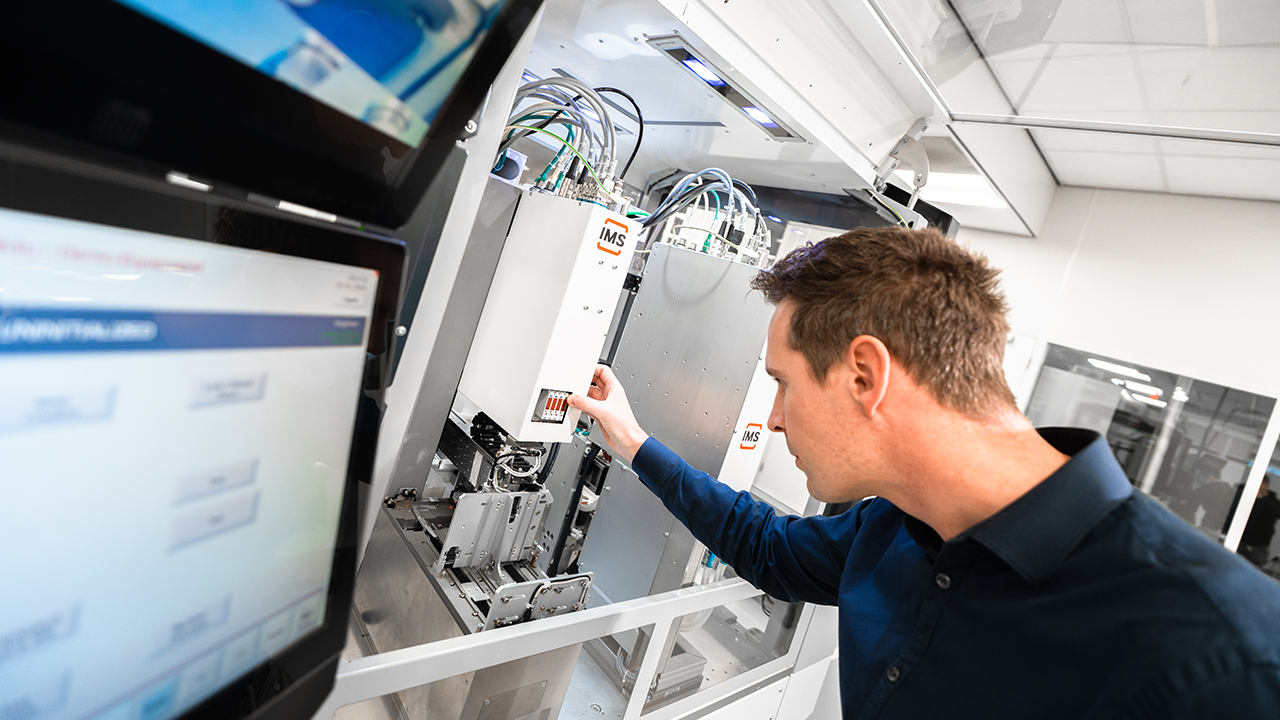
Many devices combine materials. Each specific material in an assembly may require different handling strategies. A titanium component needs firm gripping and can tolerate higher forces while silicone requires gentle handling. The assembly sequence must account for these differences, and the tooling must transition between handling methods seamlessly.
Micro bonding processes add another layer of complexity. Adhesive bonding requires precise dispensing (controlled volume, consistent bead geometry), accurate part placement during cure, and often controlled temperature and humidity. Thermal bonding or welding demands tight control of temperature, pressure, and dwell time. The material properties (thermal expansion coefficients, cure characteristics, surface energy) all affect process parameters. Getting this wrong in medical devices can mean invisible defects that may manifest after implantation.
The engineering approach requires testing and validation
For each material and assembly operation, we develop handling strategies, build test fixtures, and validate that the approach achieves the required precision and reliability. This isn’t guesswork. It’s systematic testing of grip forces, placement accuracy, and process capability across a statistically meaningful sample of parts. For Class III devices, this validation data becomes part of your design history file, demonstrating that the manufacturing process can consistently produce parts meeting specifications.
Material science and automation engineering are inseparable disciplines in precision manufacturing. The companies that recognize this early, and invest time in understanding how their materials behave under automated handling, build more robust processes and achieve higher yields than those who assume a generic automation solution will adapt to any material.
Find out which materials may trouble your production processes. Bas is ready to take your project steps ahead.
|
 |

